
How to Cook Dried Beans From Scratch
Dried beans are one of the most economical, nutritious, and versatile ingredients in a plant-based kitchen. Once you know how to cook them, you'll never look back. This guide covers everything - from soaking to stovetop to slow cooker - plus handy conversion charts so you can follow any recipe with confidence.
Step 1: Rinse & Sort
Before anything else, spread your dried beans on a flat surface and pick out any small stones, shriveled beans, or debris. Then rinse them well under cold running water.
Step 2: To Soak or Not to Soak?
Soaking isn't strictly required, but it does reduce cooking time and can make beans easier to digest.
Overnight Soak (recommended) Cover beans with 3x their volume of cold water and let sit for 8–12 hours. Drain and rinse before cooking.
Quick Soak Cover beans with water in a pot, bring to a boil for 2 minutes, remove from heat, and let sit for 1 hour. Drain and rinse.
No Soak Skip ahead to cooking - just add 30–60 minutes to your expected cook time.
💡 Always discard the soaking water and cook in fresh water. This helps reduce the compounds that cause digestive discomfort.
Cooking Methods
🥘 Stovetop
The classic method. Add soaked beans to a pot and cover with fresh water by about 2 inches. Bring to a boil, skim any foam, then reduce to a gentle simmer. Keep the lid slightly ajar.
Do not add salt, tomatoes, or acidic ingredients until the beans are fully tender as acid toughens the skins and increases cook time.
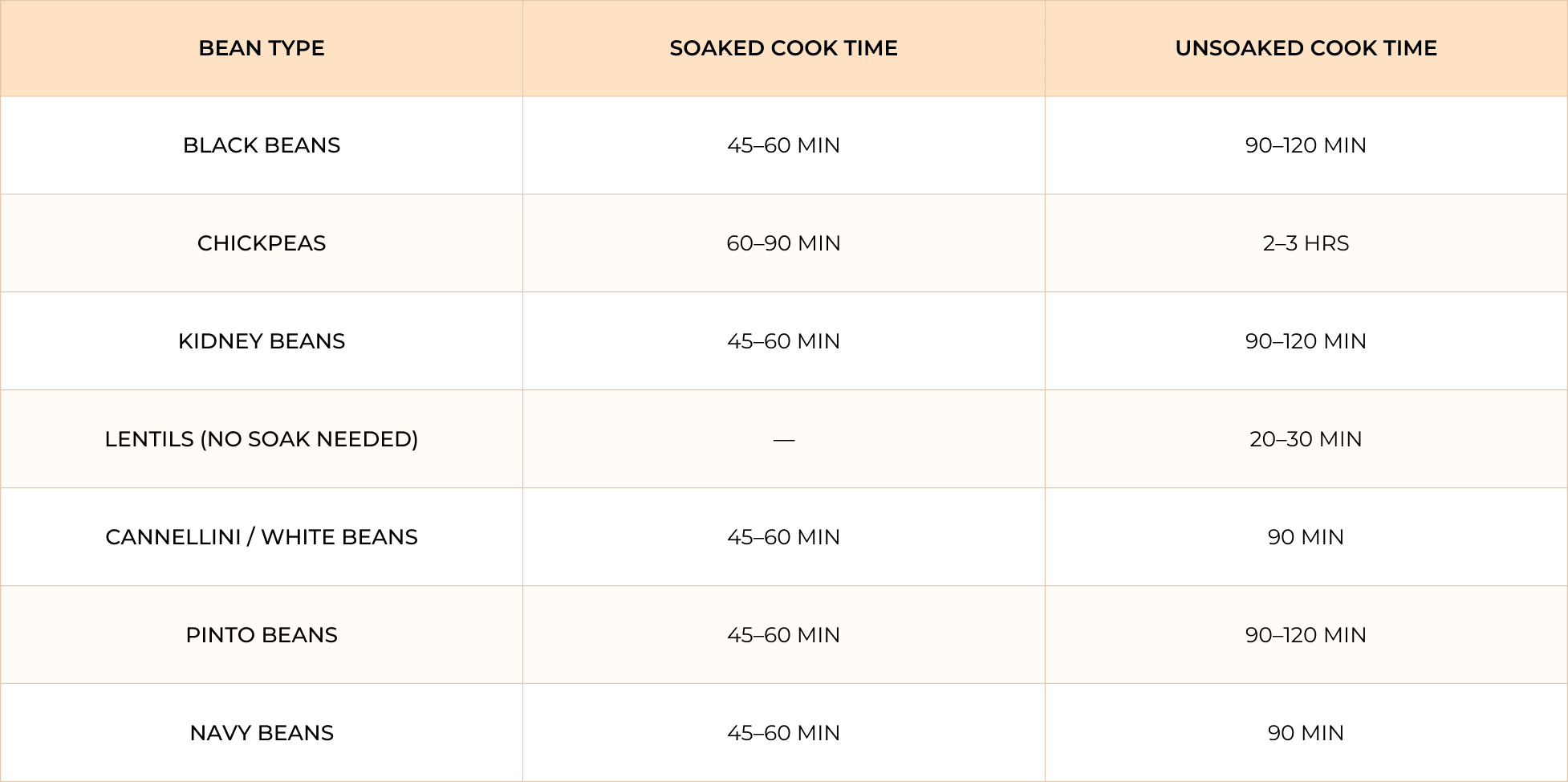
Beans are done when they're creamy and tender all the way through - taste a few to check.
⚡ Pressure Cooker / Instant Pot
The fastest hands-off method. Add soaked beans and cover with 2 inches of fresh water. Do not fill past the halfway mark.
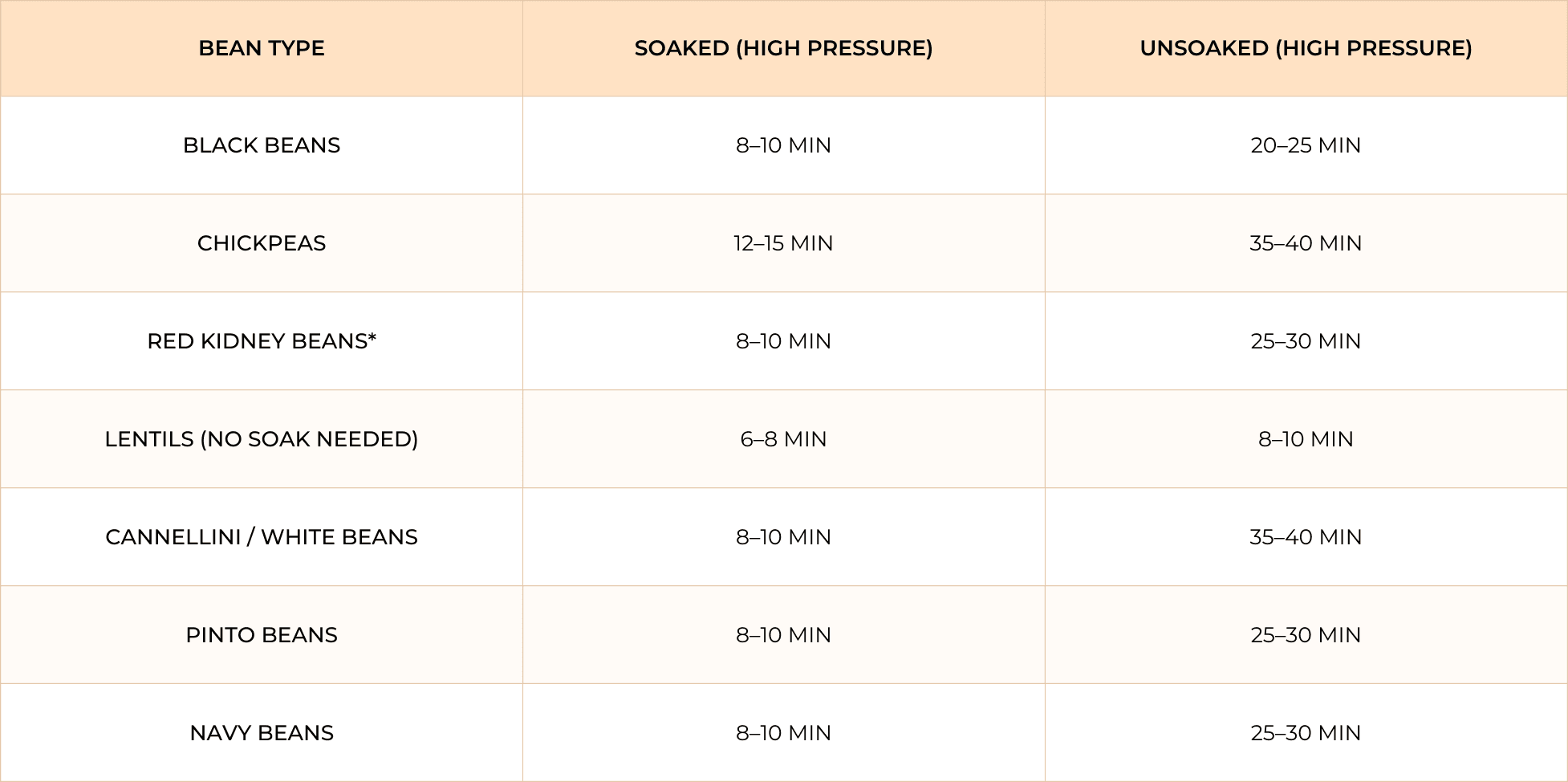
*boil for 10 minutes before pressure cooking
Always allow a natural pressure release of at least 10-15 minutes before opening. This prevents the skins from splitting.
🌡️ Slow Cooker / Crockpot
⚠️ Important: Some beans, like red kidney beans for example, contain a naturally occurring toxin (phytohaemagglutinin) that must be deactivated by a hard boil. That’s why cooking them on a stove top or in an Instant Pot is recommended.
Conversion Guide: Dried Beans ↔ Canned Beans
Whether a recipe calls for canned and you only have dried, or you've batch-cooked a big pot and need to know how much to use - this chart has you covered.
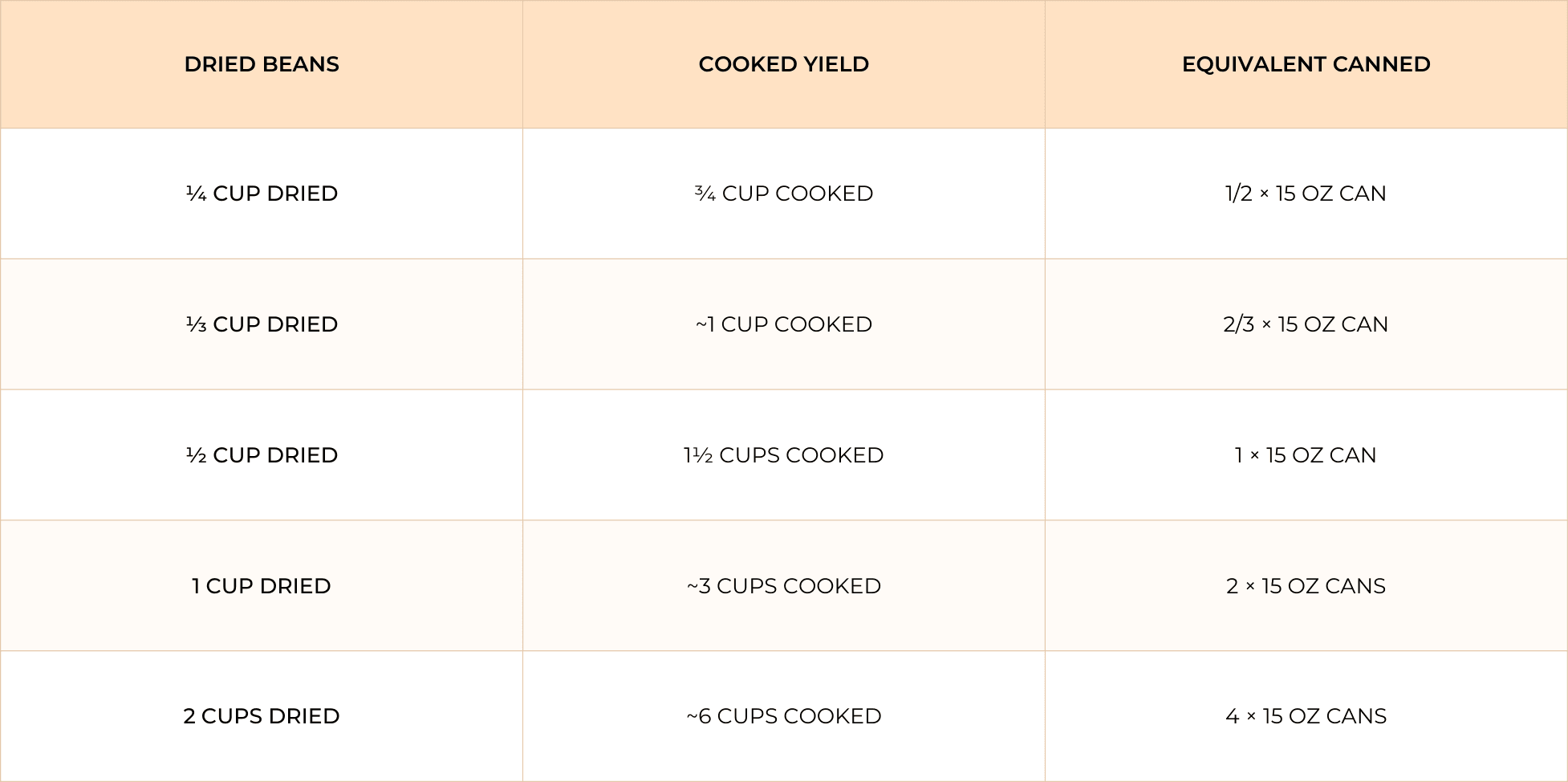
The golden rule:
1 can (15 oz) of beans ≈ 1½ cups cooked beans ≈ ½ cup dried beans
Note: All measurements here are approximations — and for most recipes like soups, stews, and curries, that's perfectly fine. The exception is baking, where ratios matter more, so it's worth measuring carefully there.
Reading a Recipe: What to Use
If a recipe says "1 can of black beans": → Use 1½ cups of cooked black beans, or cook ½ cup of dried black beans from scratch.
If a recipe says "2 cups cooked chickpeas": → Use 1½ × 15 oz cans (about 1.5 cans, drained) - or start with ⅔ cup of dried chickpeas.
If a recipe says "1 cup dried lentils": → Expect roughly 2½ cups once cooked. No conversion needed for the recipe - just cook them first.
Pro Tips for Perfect Beans Every Time
- Salt at the end: add salt only once beans are fully tender to keep skins soft.
- Save the cooking liquid: aquafaba (chickpea liquid) is a great egg replacer; bean broth adds flavour to soups and stews.
- Batch cook and freeze: cooked beans freeze beautifully for up to 6 months. Portion into 1½ cup servings (= 1 can) for easy recipe use.
- Add aromatics while cooking: a bay leaf, a halved onion, or a smashed garlic clove adds depth with no effort.
- Old beans take longer: dried beans more than 1–2 years old may never fully soften. Buy from stores with good turnover.
Storing Your Cooked Beans
Once cooked, beans are incredibly meal-prep friendly.
In the fridge: Store cooled beans in an airtight container, submerged in a little of their cooking liquid to keep them moist. They'll keep for 4–5 days.
In the freezer: Portion into 1½ cup servings (the equivalent of one can) and freeze in airtight containers or zip-lock bags for up to 6 months. Lay bags flat to save space. Thaw overnight in the fridge or straight into a hot pot from frozen.
Make It a Weekend Ritual
Cooking a big batch of beans on the weekend is one of the simplest habits you can build in your kitchen. An hour of mostly hands-off simmering on a Sunday sets you up with ready-to-go protein and fibre for the entire week; no cans needed.
Use them to throw together quick weeknight meals like the recipes below. Your future self (and your grocery budget) will thank you.
A few recipe ideas:

Smokey Breakfast Beans & Toast (QUICK)

Let us know by chat if you have any favorite beans or a favorite recipe from the Meal Planner!